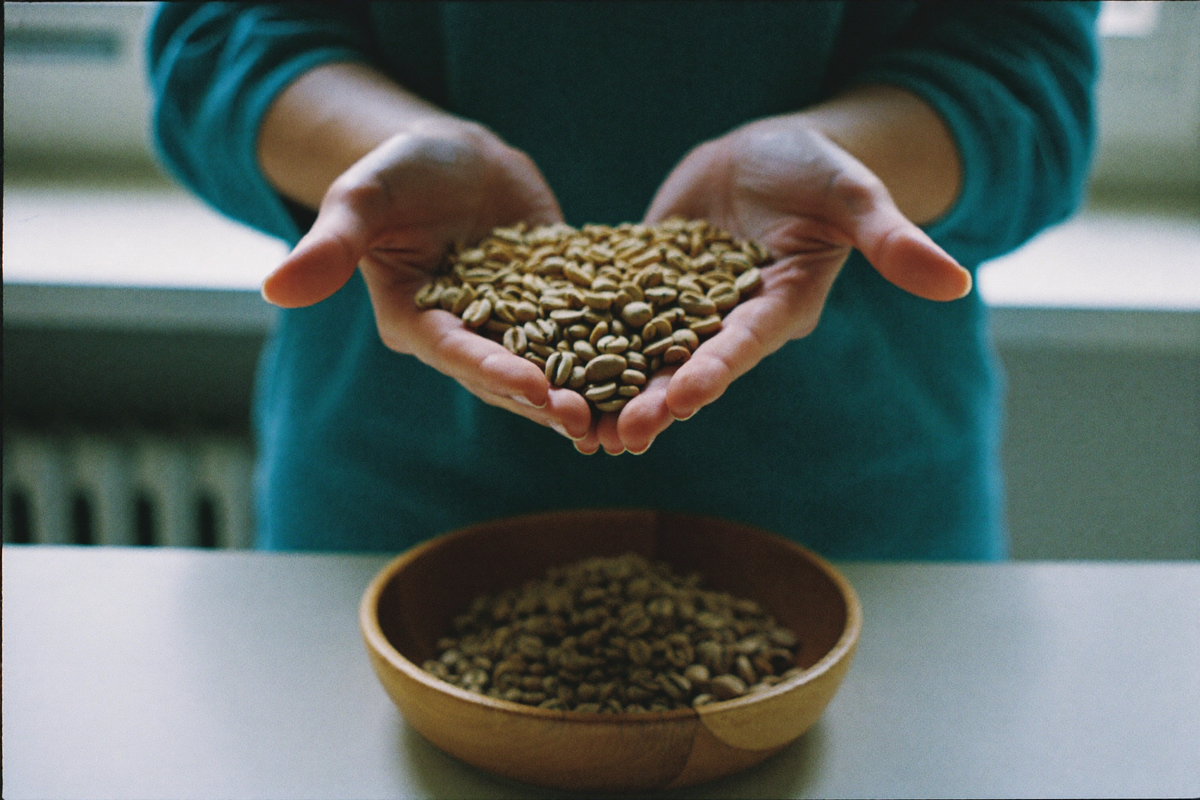
Green coffee is sold as the patient option. It travels in jute across an ocean and then sits in a warehouse for months while nobody worries about it. Next to roasted coffee, which is noticeably flatter three weeks after the roast date, it looks close to indestructible. That comparison is what does the damage. Green coffee is far more stable than roasted coffee. Stable is not the same as permanent, and the gap between those two words is where people lose a sack.
Unroasted coffee stays usable for years and stays good for months. Specialty green is at its best within roughly six to twelve months of harvest. After that it loses acidity and aromatic definition and drifts toward the two flavours the trade has names for, faded and baggy. Buy green in quantities you will roast inside six months, and store it cool, dark, dry and ventilated.
The reason so much writing says otherwise is that the older books are describing a real thing and valuing it differently. William Ukers, writing in 1922, treated "green coffee improves with age" as settled fact and built shopping advice on top of it. He was not lying. He was working in a trade that prized body and sweetness and had no particular attachment to the bright, aromatic top end that a modern specialty buyer is paying for. Time takes that top end away first. If you do not want it, its departure is not a loss.
What ageing actually does to the bean
Green coffee does not simply decay. It moves in two directions at once, and only one of them is a loss.
Kenneth Davids, whose home-roasting book is the standard text on the subject, sets it out plainly: as green coffee ages in decent conditions, acidity slowly decreases and body increases. The same coffee drunk as new crop, meaning the first year after harvest, tastes brighter and slightly lighter in the mouth. Drunk as past crop, a year or more after picking, it tastes flatter and fuller. Nothing has gone wrong. Something has been traded.
What is going wrong is a separate process, and it needs moisture to happen. Green coffee leaves origin holding roughly ten to twelve percent water, which is the accepted export window. Below it the beans go brittle and lose aromatics. Above it, mould risk climbs and degradation accelerates. When green sits in a damp or warm room, the flavour it picks up is what cuppers call baggy: a flat mustiness with a rope or sackcloth edge to it. Alongside that it goes faded, meaning its own character becomes dull and subdued. Neither is ageing. Both are damage, and neither reverses.
So the honest version of the answer has two clocks running. One is slow and directional and turns a bright coffee into a heavy one. The other is fast, conditional on your storage, and turns any coffee into cardboard.
The answer depends on the bean as much as the calendar
This is the part that gets flattened into a single number, and the single number is always wrong.
Davids's own observation is that good, high-grown greens from Central America, Colombia and East Africa, held cool and dry and ventilated, hold their character for a good two to three years. Early on, inside the first twelve months or thereabouts, they soften at the edges and pick up sweetness. Then they gain body and gradually give up brightness. A dense bean grown high has a slow clock.
A softer, lower-grown coffee does not. He notes Brazilian Santos beginning to lose acidity as early as six months after harvest, and developing baggy character after a year or so. Coffees that arrive dark green or brown and high in moisture, traditional Sumatras and Sulawesis in particular, will pick up musty notes in storage of almost any length. And any coffee at all, held hot and humid, can fade or go baggy inside a few months to a year of harvest.
Two coffees bought on the same day can therefore be a year apart in condition. Density, growing altitude, moisture at export and the room you keep them in matter more than the date on the invoice.
The part nobody mentions: old green changes the roast
Here is the practical consequence that almost never makes it into a storage article, and it matters more than the tasting notes do.
Past-crop beans roast faster than new-crop beans, sometimes dramatically faster. Davids's oven-roasting instructions carry different starting temperatures for exactly this reason: 540°F/280°C for fresh new-crop coffee, 520°F/270°C for past-crop, aged or monsooned beans. The mechanism is water and density. Browning reactions cannot begin until the water in the bean has been driven off, so a moist, hard, new-crop bean absorbs more heat and takes longer to get moving, while a drier, older bean starts browning sooner and runs away from you.
Which means a home roaster who buys a year-old sack and keeps their usual profile is not roasting the same way they were last month. They are running hot into a bean that needs less. The coffee comes out roastier and thinner and the sack gets blamed for being old, when half of what they are tasting is a profile that no longer fits. This is also why the same problem shows up in reverse with a brand-new crop. The roast runs too slow and the cup comes out pale and grassy.
Professional roasters handle this by measuring bean density and adjusting chamber temperature to suit. At home, the workable version is to treat every new sack as a new coffee and give it one throwaway batch before you judge it.
Ageing on purpose is a different product
The strongest argument that time is not simply decay is that some of the trade does it deliberately, at expense, and sells the result.
Sumatran and occasionally Sulawesian coffees are bought by exporters and held for two to five years in ventilated warehouses in Singapore, out of rain and sun, with the bags rotated periodically so no part of the pile takes more moisture than another. Indian monsooned Malabar reaches a similar destination faster: dry-processed coffee is held in warehouses open to the monsoon winds, and within weeks the beans yellow, swell and change taste. Both routes produce a coffee that is heavy on the palate, sweet, low in acidity, and carrying musty or malty notes that run from chocolate and carob at the good end to flat and hard at the bad one.
That is the useful distinction. Ageing is a transformation somebody chose, controlled and paid for. A sack that got old in your garage is not a young version of that. It is the same direction of travel with none of the control.
What this will not do
Good storage will not reverse anything. It holds a condition. A coffee that arrived already faded is a well-preserved faded coffee, and no container, temperature or humidity control will put the acidity back. If you have a sack that has gone baggy, roasting it darker will cover the fault rather than remove it, and blending it into something bright will drag the bright coffee down rather than lift the dull one up.
Knowing all this will also not help you audit a bag of roasted coffee you already own. Retail bags carry a roast date if you are lucky, and almost never a harvest year. Even that roast date only tells you about the second half of the story, which is why a very fresh bag needs a few days before it brews properly and why the harvest behind it stays invisible. The roaster knows whether they are working with current crop or past crop. You will only find out by asking, and the answer is worth asking for.
And none of it makes green coffee a sensible thing to stockpile. The saving on buying green in bulk is real, and Davids puts it at 25 to 50 percent of the per-pound cost, a figure from his 2003 revised edition. It predates the 2024 to 2026 green price shock and should be read as a ceiling rather than a promise. Either way the saving is calculated against coffee you actually roast. Twenty kilos bought at a discount and roasted over three years is not a discount. It is an expensive experiment in fading.
What good storage looks like, and where the advice has moved
Davids's prescription is a kitchen cupboard, not a cellar. Cool rather than cold, out of the light, no damp, and with air able to move around the bags. Plastic is acceptable for a month or two and then becomes a liability, so anything held longer goes into cloth or corrugated cardboard, lifted off the floor so air moves underneath, and turned over every few months so the pile does not develop a damp bottom.
Where honesty requires a note: that advice was written for a world in which green shipped and stored in breathable jute, and the trade has partly moved away from it. Barrier liners of the GrainPro type, vacuum packing at origin and, at the specialty end, frozen green storage all work on the opposite principle, which is to stop moisture exchange rather than encourage airflow. Both positions are defensible because they are solving different halves of the problem, and we are not going to pretend the question is settled when the people who buy green for a living are still arguing about it. If you are storing under ten kilos in a temperate house, the pantry version is the one that will not hurt you.
One last thing worth knowing about the clock: it does not start when you think. Green is traditionally rested in parchment for thirty to sixty days before hulling, a step Latin American producers call reposo, and Jonathan Morris puts the window at one to two months. Morris's reason for the rest is that it lets the bean mature past the grassy character a freshly processed coffee carries. Harvest date and the date the coffee became a stable, hulled, shippable thing are not the same date.
None of this is coffee we sell. We sell the objects around it, and this question comes from people already further down the road than an average cupboard requires. If you are trying to work out whether a sack has slipped, the method is the one that works for everything else in coffee: buy a little current crop of something you know, and brew the two side by side rather than one at a time. Faded is very hard to notice alone and very easy to notice next to its younger self.
Once the coffee is roasted, the storage problem inverts and the advice inverts with it. Airflow stops being a friend. We have written separately on why the fridge is the one place roasted beans should never live and how freezing actually works if you portion it first.