The fridge feels like the careful choice. It is cold, it is dark, it shuts properly, and every other perishable thing in the house already lives there. That reasoning is correct for milk and wrong for coffee, and it is wrong in a specific way: the fridge makes coffee worse than leaving the bag on the counter would have.
Keep coffee airtight, opaque, dry and at room temperature. Not the fridge. If you have more than about three weeks' worth, freeze the surplus in sealed portions and leave the rest in the cupboard. The fridge is the only storage location that manages to combine the weaknesses of the counter with several of its own.
What is actually happening to the beans
Staling runs as two processes at once, and they are not the same problem.
The first is loss. Roasting produces a very large number of volatile aromatic compounds, and volatile is the operative word: they leave. What you smell when you open a fresh bag is inventory escaping. Nothing stops that, and the bean gets quieter every week whatever you do.
The second is gain, and it is the worse one. Oxygen and moisture react with the oils in the bean to create new flavours that were not there before, flat and papery ones. This is the difference between coffee that has become boring and coffee that has gone off. A bag six weeks old tastes like less. A bag that has been damp tastes like cardboard, which is a thing that was added.
Good storage is not about stopping the first process. It is about not accelerating the second.
Why the fridge loses on every count
Temperature. Chemical reactions slow as things get colder, so the instinct is not stupid. But a domestic fridge sits a little above freezing, which slows staling by a margin too small to notice against everything else it does wrong. It is a large intervention for a small return.
Moisture. A fridge is a humid box with a cold surface in it. Take a bag out and the beans are colder than the room, so water condenses onto them exactly as it does on a cold glass. Water on coffee feeds the oxidation you were trying to prevent, and if the coffee is ground it clumps and brews unevenly on top of that.
Odour. Roasted coffee is porous, which is the same property that makes it extract. It is very good at taking up the smell of whatever else is in the fridge, and a fridge always contains something. This is the failure people notice first and misattribute to the roaster.
Cycling. The other three would be survivable once. The fridge does them every time the door opens, which in most houses is many times a day. Repetition is what turns a small penalty into a ruined bag.
What to do instead
-
Leave it in the bag it came in, if that bag has a valve. Foil with a one-way degassing valve is genuinely good packaging. It lets carbon dioxide out without letting oxygen in. Fold the top down and clip it. This is free and beats most containers people buy.
-
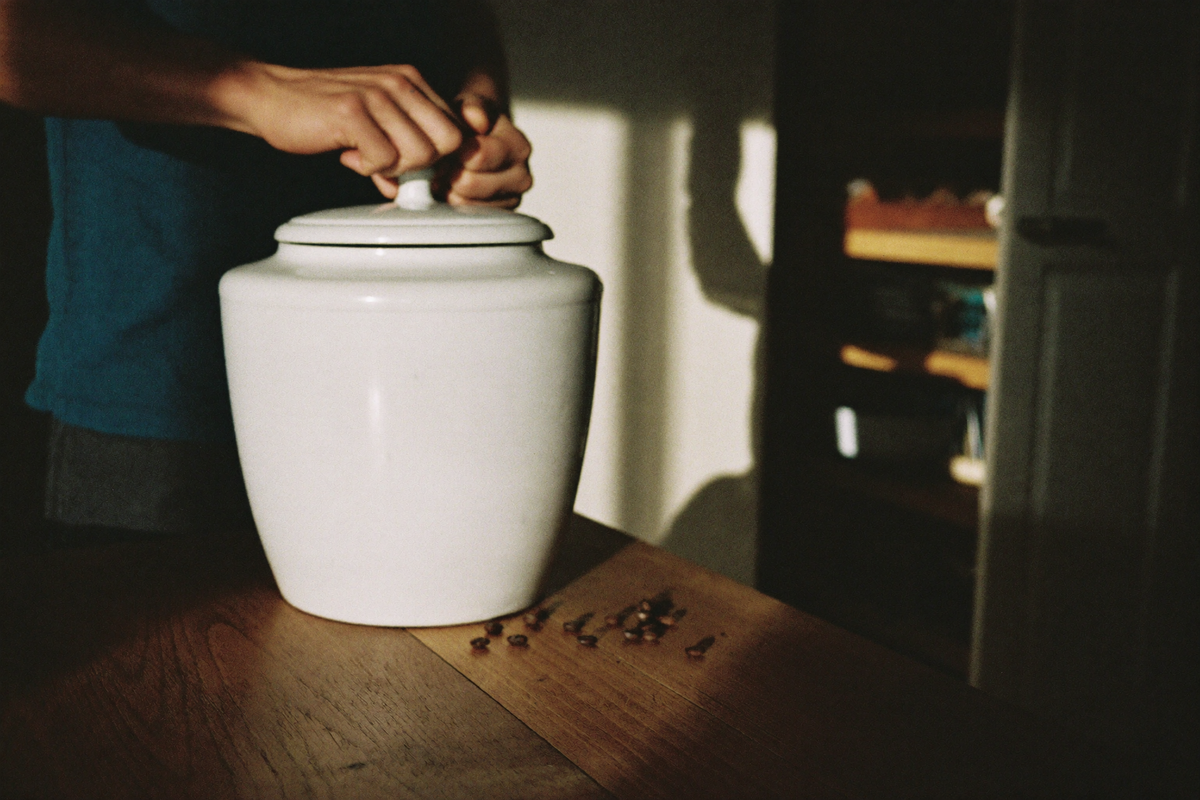
If you decant, decant into something opaque and airtight. Light accelerates staling badly, so a clear jar on a sunny shelf is a worse container than the bag was. Opaque matters more than beautiful here, and if a container is both then you have lost nothing.
-
Buy in amounts you will drink. Hoffmann's consumer checklist is the clearest one in print: buy coffee with a visible roast date, buy it within about two weeks of that date, buy only a couple of weeks' worth at a time, and buy whole bean. Most storage problems are really purchasing problems.
-
Freeze the surplus, properly, on arrival. Portion into sealed amounts you will use in one go, get the air out, and take one portion out at a time. Grind it straight from frozen without letting it warm up. Do not open a portion, take some, and put the rest back, because that is the fridge failure again in miniature. We wrote the method out in full in freezing coffee works if you portion it first.
How you know it worked
This is the part nobody checks, so it is worth being concrete. Two weeks after opening a bag stored your new way, the coffee should still smell of something identifiable when you open the container, and the first sip should still have some acidity in it. Staled coffee does not turn bitter. It goes flat and slightly papery, and the acidity is the first thing to leave.
If you want a harder test, buy two bags of the same coffee, store one in the cupboard and one in the fridge, and brew them side by side at three weeks. The difference is not subtle, which is the point.
What this will not do
Correct storage will not make old coffee good. It holds a condition, it does not restore one. A bag that was already four weeks past roast when you sealed it is a well-preserved four-week-old bag.
It will not rescue pre-ground coffee either. Grinding multiplies the surface area exposed to oxygen enormously, and most of what storage protects has already gone by the time the grounds reach you. You can store it correctly and it will stale more slowly, but you are carefully preserving something that has already lost the argument.
And it will not matter much at all if you drink a bag in under two weeks. At that speed the bag on the counter, folded shut, is fine. Every container we could sell you would be a few percent of improvement on that, and we would rather say so than pretend otherwise.
The one thing genuinely worth changing is the fridge. If your beans live there, move them tonight. That single change is worth more than any container you could buy, and it costs nothing.