Most people brewing at home are turning one dial and expecting two different results from it. That is why the coffee keeps landing somewhere between wrong and nearly right, and why adding more coffee sometimes fixes it and sometimes makes it worse.
Strength and extraction are two separate measurements, and almost every home brewing problem is a confusion between them. Strength is how much dissolved coffee is in the water. Extraction is what fraction of the ground coffee dissolved at all. You can have a strong, under-extracted cup that is sour and heavy at the same time, and you can have a weak, over-extracted cup that is thin and bitter at once. Once you can name which one you have, the fix stops being guesswork.
The two measurements, plainly
Put 20 grams of ground coffee in a brewer and pour 300 grams of water through it. Two questions have separate answers.
How much of that 20 grams ended up dissolved in the liquid? That is extraction, and it is a percentage of the dry coffee. Roughly a fifth of a coffee bean is water-soluble at all. The rest is plant fibre that will never leave the filter no matter what you do.
How much dissolved coffee is in each mouthful? That is strength, usually written as total dissolved solids. It is a concentration, not a fraction.
The relationship between them is the part that catches people. You can move strength without touching extraction, simply by adding water at the end. Dilute a brew and every sip has less coffee in it, but the fraction you pulled out of the grounds has not changed by a hair. Sourness caused by under-extraction survives dilution perfectly. It just arrives quieter.
That single fact kills the most common home fix in coffee. When a cup tastes sour and weak, adding more coffee makes it sour and strong. The sourness is not a strength problem, so strength was never the lever.
Where the numbers come from, and how much to trust them
The commonly quoted target band is 18 to 22 percent extraction, with under 18 reading flat and sour and over 22 reading bitter and astringent. It comes out of the Gold Cup work and it has been repeated in most brewing manuals since.
Treat it as a map, not a law. That band is under active revision, particularly for light roasts, where well-run brews land above 22 percent and taste sweet rather than harsh. Anette Moldvaer's Coffee Obsession and Sébastien Racineux and Chung-Leng Tran's Coffee Isn't Rocket Science both work inside the classical band, and both were written before the current argument about it started. The direction of the numbers is sound. The edges are softer than the citations suggest.
You do not need a refractometer for any of this. The numbers exist to explain the mechanism. Your tongue does the measuring.
Which one you have, in one taste
The tasting distinction is more reliable than the arithmetic, and it costs nothing.
Under-extracted coffee is sour, thin in the finish, and often salty at the edges. It tastes like it stopped early, because it did. The acids in coffee dissolve first, the sugars second, and the bitter compounds last. Cut the process short and you get a cup made mostly of the fast fraction.
Over-extracted coffee is bitter, drying, and hollow. The astringency shows up as a rasping feeling on the sides of the tongue rather than as a flavour. You have pulled past the sweetness into the compounds that were better left in the grounds.
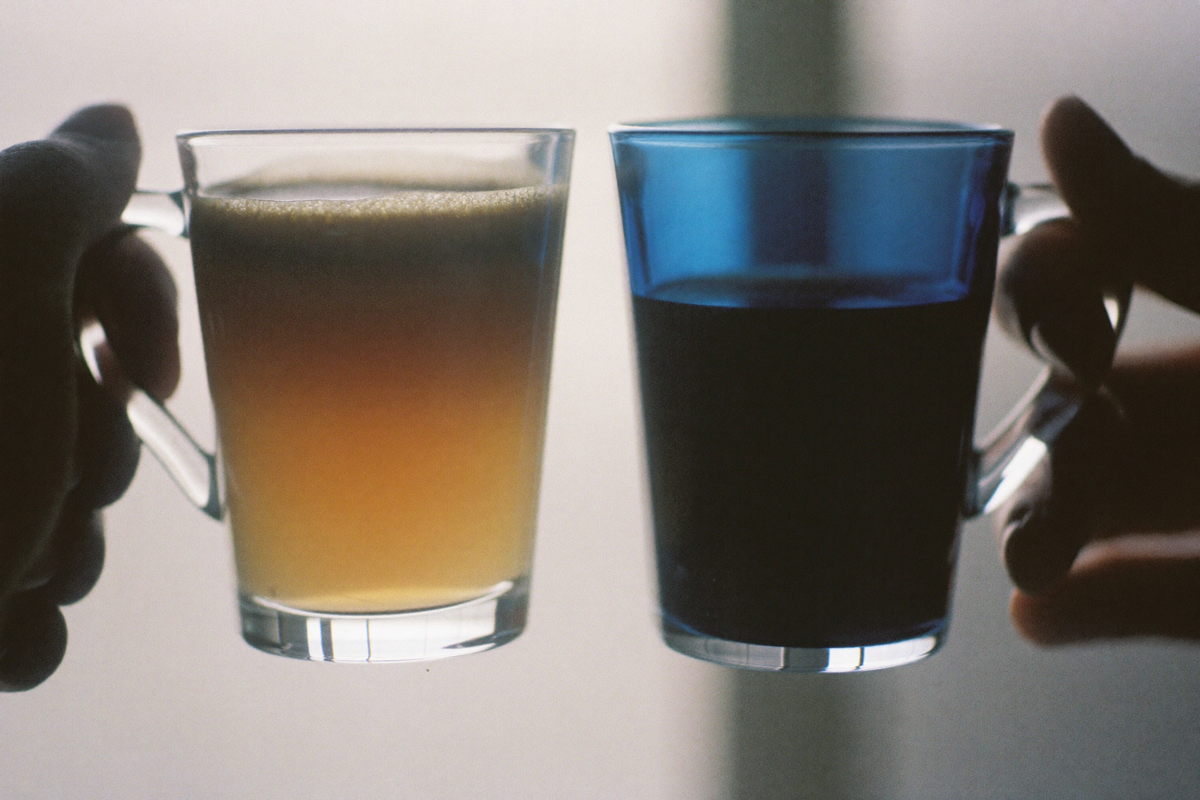
Strength is a separate axis running across both. A concentrated under-extraction is aggressive and sour. A dilute over-extraction is watery and bitter, which people rarely expect and often blame on the beans.
If the cup is unpleasant but you cannot place it, the sour or bitter diagnostic is the shortest route in.
The lever that actually moves extraction
Extraction is governed by how much coffee surface the water can reach and how long it has to work.
Grind finer and you multiply the surface area, so more dissolves in the same time. Brew longer and more dissolves at the same grind. Grind size and contact time are two ends of one lever, which is why a 30-second espresso needs a fine grind and a four-minute press needs a coarse one. Every grind chart you have ever seen is that single line, sampled at different times.
This tells you what to change and in what order. If the method fixes your contact time, change the grind. If your grinder cannot go where you need, change the time. Racineux and Tran give the ordering plainly: grind first, then ratio, then temperature. That sequence works because grind moves extraction hardest and ratio moves strength hardest, so doing them in the other order means correcting one problem with the wrong tool.
Water temperature moves extraction too, but less, and it is the noisiest of the three to adjust at home.
The case where both dials are wrong at once
Here is the state that makes people give up: coffee that is somehow too strong and too sour at the same time.
It sounds contradictory and it is not. Racineux and Tran's most useful contribution is a two-axis map with extraction running left to right, sour to bitter, and concentration running bottom to top, weak to strong. Every cup sits somewhere on that plane. Too strong and too sour is simply the top left corner, and it is completely coherent once you stop treating the two words as synonyms.
The value of the map is that each thing you can change moves you in a known direction, and some of them move you diagonally. Raising the dose raises concentration and lowers extraction, because the same water now has more coffee to get through. Lengthening the brew lowers concentration and raises extraction. That is why the intuitive move of adding coffee to a sour cup makes the sourness worse rather than better. It is not bad luck. It is the geometry.
What this will not do
Naming the axes will not fix a cup that is failing for a reason underneath both of them.
It will not rescue a blade grinder. A grinder that produces dust and boulders at the same time is over-extracting and under-extracting in the same brew, so the cup is a blend of both faults and no single adjustment lands. Sorting extraction requires that your grounds be roughly the same size to begin with.
It will not fix stale coffee, and it will not fix coffee that is too fresh. Neither is an extraction problem.
It will not settle taste. The band tells you where most people find most coffees pleasant. If you like your filter brewed short and bright, you are not brewing it wrong. You have a preference, and the map's only job is to help you get back to the same place tomorrow.
And it does not need equipment. If you find yourself shopping for a refractometer to solve a problem you can taste, the tool has become the hobby. That is allowed. Just do not confuse it with a fix.
What to do tomorrow morning
Brew the same coffee twice, changing only the grind, one step finer on the second. Taste them side by side, warm rather than hot, because heat suppresses sweetness and you want to judge the sugars.
One of them will be rounder. That is the direction extraction wants to move for that coffee in that brewer, and you have just found it with no instruments at all. Then leave the grind alone and change only the ratio, which moves strength without disturbing the balance you just set.
Two brews, two facts, in the correct order. That is the entire method, and it is the one discipline that makes every other change legible.
We sell cups and servers. We do not sell grinders, scales or brewers, so there is nothing at the end of this for us. If a single sentence here saves you from buying a machine to solve a grind problem, that is the piece working as intended.