There is a step in almost every espresso recipe ever written that most people at home skip entirely, and it costs nothing, requires no equipment, and takes four seconds. It is also, for small drinks, worth more than most of the upgrades people spend hundreds on.
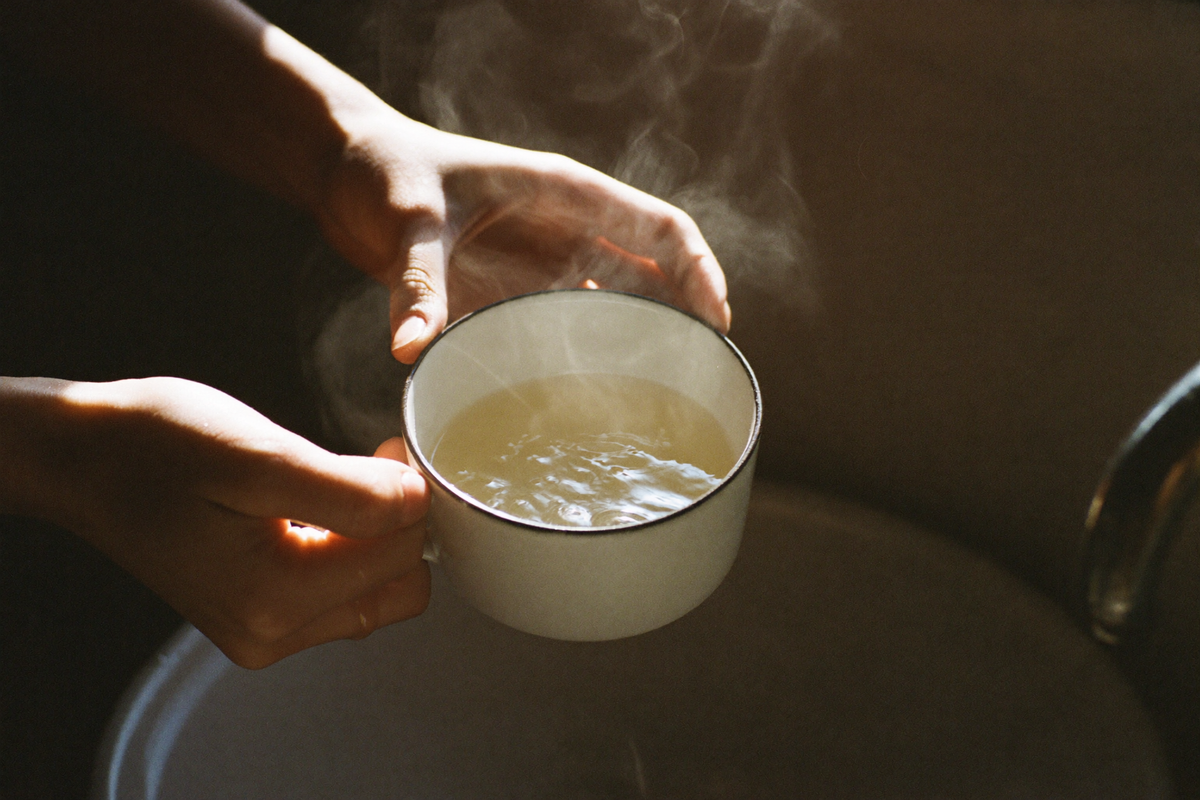
Rinse the cup with hot water and tip it out before you pour. That is the whole technique. The reason it matters is arithmetic, and once you see the numbers it becomes difficult to skip.
The arithmetic
A single espresso is roughly 25 grams of liquid.
A thick stoneware demitasse can weigh 150 grams or more.
Pour a drink at around 90 degrees into a room-temperature object with six times its mass and a comparable capacity to absorb heat, and a substantial share of that drink's heat goes into the ceramic before it ever reaches your mouth. The coffee does not cool gradually in the cup. It cools instantly, on contact, and then continues from a lower starting point.
This is why an espresso in an unheated heavy cup is close to the worst case in the entire beverage world. The drink is small, so it has little heat to give away. The vessel is heavy, so it takes a lot. The two facts multiply.
It is also why this is the single most repeated instruction in the recipe sections of the reference books. Nearly every espresso preparation opens by warming the cup. Not as a flourish. As the step that makes the rest of the recipe true.
Why it scales with what you are drinking
The effect is not uniform, and knowing where it bites saves you doing it when it does not matter.
Small drink, heavy cup: enormous. Espresso, cortado, macchiato in a thick demitasse. This is where preheating changes the drink noticeably.
Large drink, light cup: minor. A 300 ml filter coffee in a thin porcelain mug carries a lot of heat and meets very little mass. You will struggle to taste the difference.
Large drink, heavy mug: worth doing. A big stoneware mug is a real heat sink, but the drink has enough heat that the loss is proportionally smaller.
A usable rule: preheating matters in inverse proportion to the size of your drink, and in direct proportion to the weight of your cup.
The thing that inverts once it is warm
Here is the part that makes cup choice more interesting than "thin is better."
Thermal mass is a cost when the cup is cold and a benefit once it is hot. A thick stoneware cup steals a lot of heat on contact if it starts at room temperature. But once you have preheated it, that same mass becomes a reservoir: it holds the drink in a pleasant range considerably longer than a thin one will.
So the two materials are not ranked, they are suited to different drinking styles.
Thin porcelain preheats in seconds, takes little from the drink even if you forget, and lets the coffee cool relatively quickly. It suits a drink you will finish briskly.
Thick stoneware punishes you for skipping the rinse and rewards you for doing it. Preheated, it holds temperature well. It suits a drink you will sit with.
Which means the honest instruction is not "buy thin cups." It is: preheat time should scale with wall thickness, and cup mass should scale inversely with how fast you intend to drink. If you like to nurse a coffee, buy the heavy cup and commit to the four seconds. If you drink quickly and will never remember, buy thinner and stop worrying.
What preheating will not do
It will not fix bad coffee. A sour, under-extracted shot served hotter is a sour, under-extracted shot. It will not compensate for stale beans or a grinder that produces dust and boulders in the same batch.
It will not extend your drinking window by very much either. Most heat loss in an open cup happens in the first minutes, driven by evaporation from the surface and the temperature gap with the room. Preheating removes one large instantaneous loss at the start. It does not change the slope after that.
And it will not make a difference you can taste in a large mug of filter coffee. If that is most of what you drink, this article is not for you and we would rather say so than have you adopt a ritual that does nothing.
How to actually do it
Three options, in order of how much you will keep doing them.
Hot water from the kettle. While the kettle is boiling for the brew, pour a little into the cup. Tip it out just before you pour the coffee. Free, adds no time, and works for everything.
The machine. If you have an espresso machine, run a short blank shot through the empty portafilter into the cup, or use the cup warmer on top if it has one. Note that the top-of-machine warmer takes a long time to do much from cold, so it works best if the machine is on anyway.
Leave it in the brew path. For pour-over, rinse the paper filter with the dripper sitting on the cup or carafe rather than over the sink. That step is already necessary for the paper, and it preheats the vessel at the same time. Two jobs, no extra effort.
That third one is the version most likely to stick, because it removes the decision entirely.
The uncomfortable implication for anyone selling cups
If you sell heavy ceramic, as we do, the honest disclosure is that a thick cup is worse than a thin one for anyone who will not preheat it, and better for anyone who will.
We would rather tell you that on the product page than let you buy a beautiful heavy demitasse, skip the rinse, and quietly conclude that our cups make cold espresso. They do, if you use them cold. That is not a defect in the cup, but it is a fact about the object that you deserve before you buy rather than after.