Crema is the most trusted quality signal in coffee and one of the least informative. Machines are marketed on it, beginners judge their progress by it, and cafés are assessed on it by people standing at the counter. It tells you two things, and neither of them is what you think.
Crema indicates how recently the coffee was roasted, and how dark and concentrated the liquid underneath is. That is the complete list. It says nothing about the quality of the green coffee, nothing about whether the roast was skilful, nothing about whether the machine is clean, and nothing about whether the shot was extracted well. The two most authoritative reference books in specialty coffee agree on this, and almost the entire consumer market still believes otherwise.
What it actually is
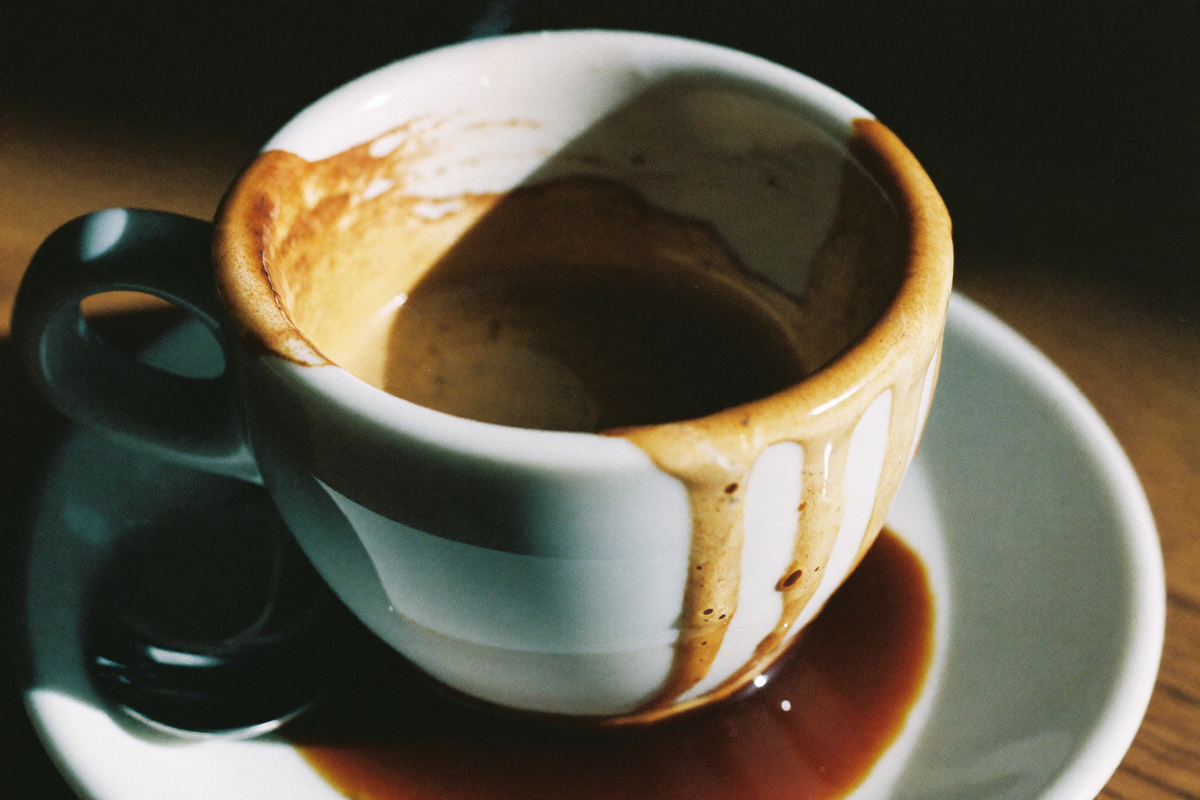
Crema is a foam of carbon dioxide, coffee oils and dissolved solids, whipped into an emulsion by water forced through the coffee bed at around 9 bar.
The carbon dioxide is the tell. Roasting fills the bean with CO2, which escapes slowly over the following days and weeks. Fresher coffee holds more gas, and more gas means more foam. So a thick, persistent crema is largely a freshness reading, which is genuinely useful information and not at all the same thing as a quality reading.
The colour and density track how dark the roast was and how concentrated the liquid is. A darker roast gives you more visible crema. A light, delicately roasted specialty coffee often gives you very little, and this trips people up constantly: they buy an excellent expensive coffee, pull a good shot, see a thin pale crema, and conclude they did something wrong.
The three things it cannot see
It cannot see extraction. You can pull a sour, under-extracted shot with a perfectly respectable crema on top. The foam forms from gas and pressure, and those are present whether or not the water spent the right amount of time in contact with the coffee. This is the single most important gap, because extraction is the thing that actually determines whether the drink tastes good.
It cannot see the coffee. A cheap robusta-heavy blend will produce a thick, stable, photogenic crema, because robusta's lower oil content actually helps the foam hold. This is precisely why traditional Italian espresso blends include it. Judging a coffee by its crema will reliably rank the cheaper bean higher.
It cannot see the machine. Coffee oils build up on the shower screen and inside the group head, and they go rancid. That produces a bitter, ashy taste that no amount of correct technique removes, and it has no effect whatsoever on the crema sitting on top.
The pressurised basket problem
There is a worse version of this, and it is sitting in a lot of kitchens.
Inexpensive espresso machines ship with dual-wall, or pressurised, baskets: a second wall with a single small hole that creates artificial back-pressure behind the coffee. The result is a thick foam that appears regardless of how badly the coffee was ground, how stale it was, or how the shot was pulled.
That is not crema. It is aerated liquid produced by forcing coffee through a small hole, and it will look convincing while the extraction underneath is completely uncontrolled. You can usually spot it: the bubbles are larger, and it collapses within seconds rather than persisting.
This is why so many people report that their beginner machine "works fine" and the coffee still tastes flat. The machine is showing them the signal they were taught to look for while hiding the thing that actually matters.
What crema is genuinely good for
Two things, and they are worth knowing.
As a freshness check. If a shot produces almost no crema and what forms vanishes in under a minute, the coffee is probably stale or was under-roasted. That is a real, actionable reading, and it is free.
As a canvas. Crema is the dark field that makes latte art possible. Without an intact layer, poured milk has no contrasting surface to sit on and no pattern forms. If you care about pouring, you need crema for a mechanical reason that has nothing to do with quality.
The part nobody says out loud
Crema is not unambiguously desirable to drink.
It is where the finest suspended particles end up, and it carries a bitter fraction. Some people deliberately spoon it off an americano before drinking, and the result is a cleaner, less harsh cup. Anette Moldvaer treats this as a legitimate preference rather than heresy, which it is.
There is a related point most people never hear: a well-made cappuccino is traditionally built to leave a ring of bare crema visible at the rim, so the first mouthful is coffee-forward rather than milk-forward. Every full-surface latte art design covers that ring. Whether that is a loss depends on what you wanted from the first sip, but it is a real change to the drink and it is worth knowing that the choice was made for you.
What this will not do for you
Knowing this will not improve your espresso. It removes a false signal, which is useful, but it does not replace it with an easy one. There is no equivalent visual shortcut for extraction quality. You have to taste the shot.
It also will not tell you a café is bad. A place that produces beautiful crema may be excellent. The point is only that the crema was not the evidence.
What to look at instead
Taste it, and use two words rather than one.
Sour, sharp, thin, salty, with a finish that disappears fast means under-extracted. Grind finer, or raise the dose, or check that the machine has actually warmed up. A domestic machine needs twenty to thirty minutes from cold before its brew temperature is stable, with the portafilter locked in, and this is the most common reason the first coffee of the morning is the worst one.
Bitter, drying, hollow, ashy means over-extracted, or a dirty machine, or dull grinder burrs producing too many fine particles. Grind coarser first. If it has been a month since you cleaned the group head, do that before you touch anything else.
That two-way diagnostic will improve your coffee. Staring at the foam will not.
If you want one object that helps here, it is a cup with a white interior, because it is the only surface that lets you see crema colour and spot pale broken patches honestly. A dark glaze hides both. We sell cups with dark interiors and we will say the same thing on those product pages, because it is true and because you will find out anyway.