We sell copper polish. Keep that in mind for the next twelve hundred words, because the honest answer to whether you should polish your copper is that it does not matter, and that answer costs us money.
Patina on the exterior of a copper object is not damage, not neglect, and not a maintenance failure. It is oxidation, it is inevitable, and whether you reverse it is entirely a question of what you want the object to look like.
There is no functional argument on either side. So the interesting question is not what you should do, it is why the decision feels weightier than it is.
What is actually happening
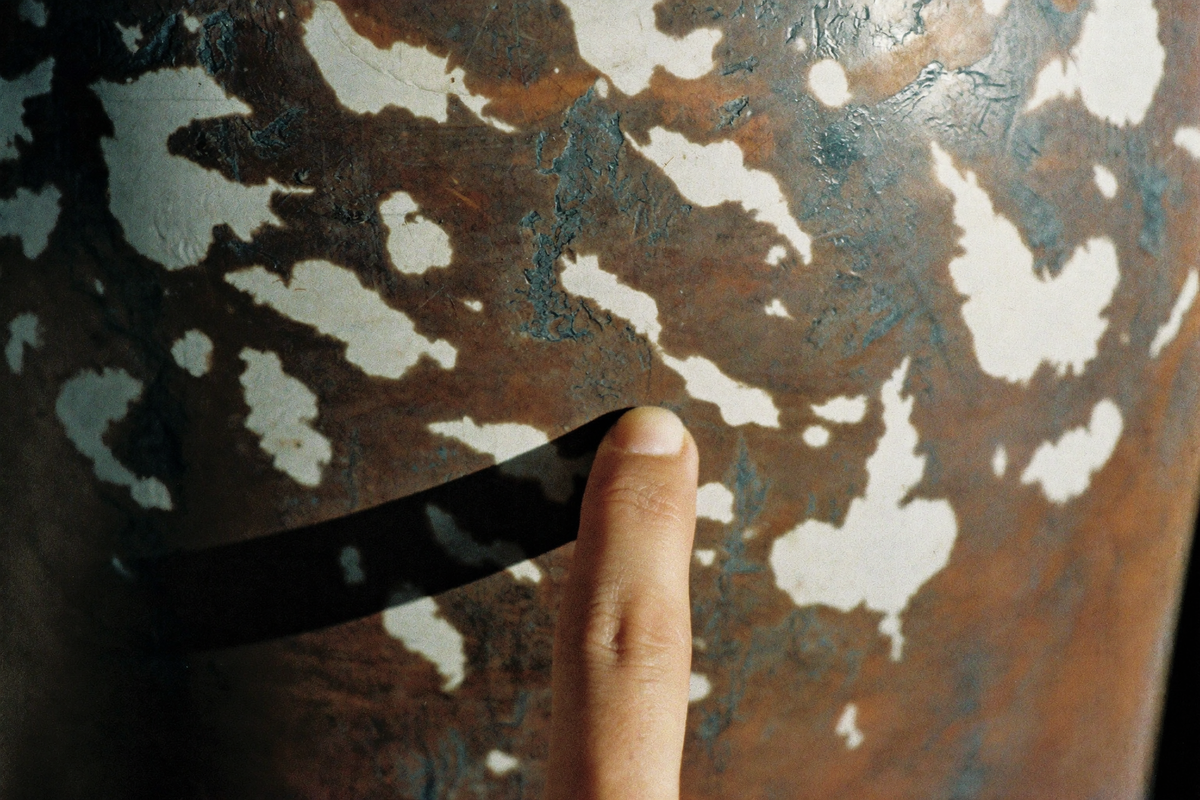
Copper reacts with oxygen and with the ordinary contents of household air. The bright orange surface goes darker, then browner, sometimes reaching something close to chocolate over years.
This is a surface layer. It is thin, it forms on the exterior where the object meets the room, and it does not eat into the metal in the way that rust progressively destroys iron. A copper vessel left unpolished for twenty years is a copper vessel with a dark surface, not a degraded one. Rust and patina are frequently spoken about as though they were the same phenomenon at different speeds. They are not, and the difference is why unpolished copper is a legitimate choice while unmaintained ironwork is not.
Reversing it is easy and takes minutes. Acid plus mild abrasive: half a lemon dipped in salt, a vinegar and salt paste, or a commercial polish. Rinse, dry properly, done.
So the object moves freely between the two states for its whole life. Nothing about the choice is permanent, which is the first reason to hold it lightly.
The green question, handled honestly
Sometimes copper develops green deposits rather than brown. This is a different reaction, associated with moisture sitting on the surface over time, and it is the colour people actually worry about when they ask whether patina is safe.
On an exterior surface, away from anything you drink, it is a cleaning question and it comes off with the same acid-and-salt treatment.
We are not going to make a toxicity claim about it, in either direction, because we do not have an official-body source in front of us for the specific case of green deposits on a coffee vessel, and this site does not publish health claims we cannot cite. What we can say is the thing that actually governs the situation: anywhere copper meets your coffee, the question is not patina but lining, and food regulation prohibits copper contact with anything below pH 6 while coffee measures around 4.85 to 5.10. If you are seeing green inside a vessel you drink from, the relevant article is the one about linings, and the relevant action is to stop using it until you know what is in there.
Outside, on the handle, on the body, on the base: cosmetic.
Why the decision feels bigger than it is
Two arguments circulate, both of them aesthetic wearing functional clothing.
The heritage argument says patina is the record of use, that an object earns its darkening, and that polishing erases a history. There is something real underneath this. A cezve that has been used every morning for fifteen years does look different from a new one, and that difference is genuinely information about the object's life.
The care argument says a maintained object is a respected one, that polishing is what you owe a good thing, and that a dark vessel signals indifference. There is something real underneath this too. Attention is a way of valuing what you own.
Both are true statements about meaning and neither is a statement about the copper. The metal is indifferent. It performs identically bright or dark, because its conductivity, its strength and its lifespan are unaffected by a surface layer measured in fractions of a micron.
What is really being decided is which story you want the object on your counter to tell, and there is no wrong answer to that, only a preference you are allowed to have without justifying it in the language of maintenance.
The one place the choice has consequences
Polishing is not free, and it has a real cost that nobody mentions.
Polish is a mild abrasive. Every time you polish, you remove a very small amount of material. On the exterior of a thick copper vessel this is irrelevant over any human timescale.
Near the rim, it is not irrelevant, because that is where an exterior routine can carry an acid paste or a polish over the edge and onto the lining, which is soft and which you must not abrade. If you polish, be deliberate about the rim. Work outward, rinse thoroughly, and do not let a lemon half wander over the lip.
That is the only genuine risk in the whole decision, and it belongs to polishing rather than to letting it age. Which is worth stating plainly given what we sell: the option with a real downside is the one we make money from, and the free option has none.
Hammered surfaces, a small note
Hand-hammered copper, which is most of the good cezves, holds patina unevenly. The recesses of the hammer marks darken faster and more permanently than the raised areas, because polish reaches the high points and skips the low ones.
The result over years is a surface with darkened texture and brighter relief, and it is the reason old hammered copper looks the way it does rather than simply looking dirty. Some people polish specifically to chase this. Others get it by doing nothing at all, more slowly and more evenly.
It is worth knowing before you decide you have polished badly. You have probably polished normally.
What we will not do
We will not tell you that patina is a mark of authenticity, which is a sentence written to sell objects that have not been looked after. And we will not tell you that a well-kept copper vessel needs polishing, which is a sentence written to sell polish.
The position we will defend is narrower. Patina is cosmetic on the exterior, the lining is what matters on the interior, and the two questions get confused constantly because both involve a surface changing colour. Keep them separate and copper becomes a much less anxious material to own.
Polish it because you like it bright. Leave it because you like it dark. Just do not let anyone, ourselves included, tell you that one of those is care and the other is neglect.