No. Dark roast tastes stronger and is not stronger, and the caffeine question has a genuinely surprising answer.
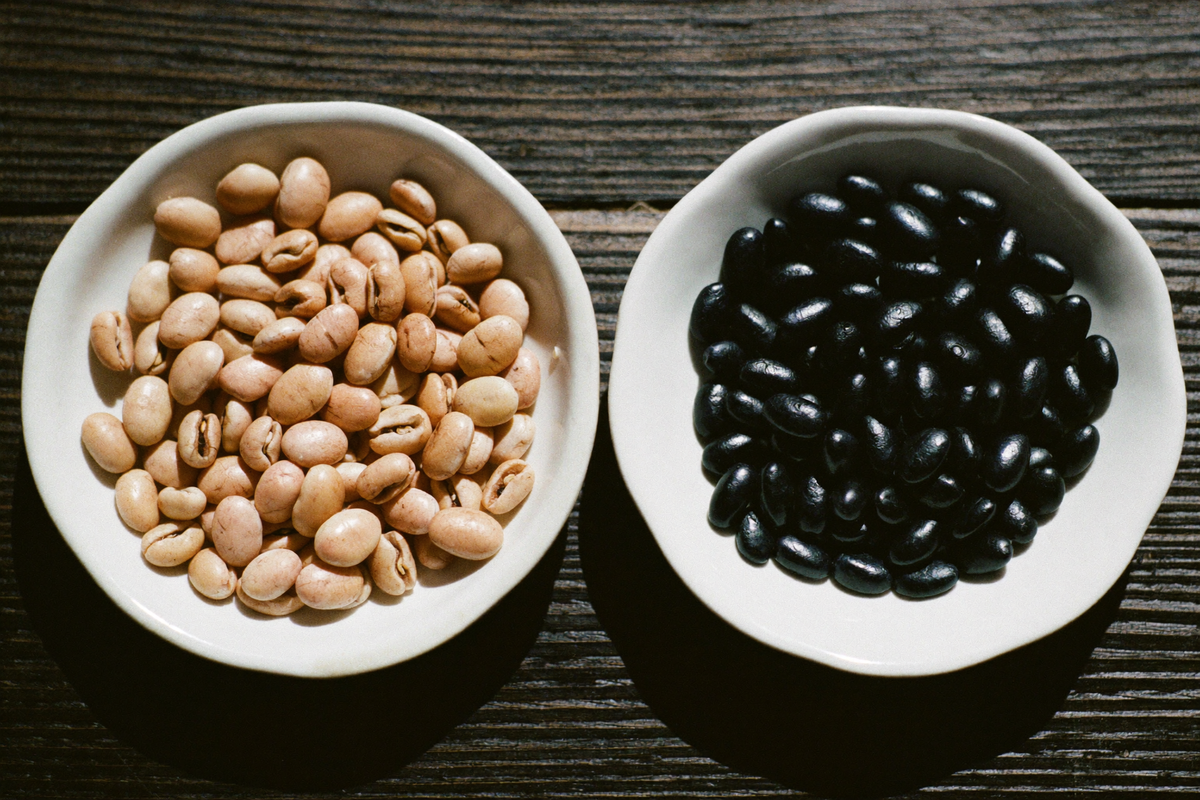
By weight, light and dark roast contain almost the same caffeine. Caffeine is largely stable at roasting temperatures, so very little is destroyed. By volume, light roast wins, and that is the whole trick: roasting drives off water and expands the bean, so a dark roast bean is larger and less dense. A scoop holds fewer of them. Measure by scoop and you get less coffee, and therefore less caffeine, from the dark roast.
So the honest answer is: it depends entirely on whether you scoop or weigh. Weigh your coffee and the question mostly disappears.
Why the myth persists in both directions
You will find confident sources claiming dark roast has more caffeine and equally confident sources claiming it has less. Both are describing a real measurement and neither states its units.
The "more" camp is measuring by weight and reasoning from mass loss: beans lose roughly 12 to 20 percent of their weight during roasting, mostly water, so what remains is marginally more concentrated. The "less" camp is measuring by scoop and observing that a fixed volume holds fewer, larger, lighter beans.
They are both right about their own measurement. The disagreement is entirely a units problem, and once you name the units it evaporates.
Then why does dark roast taste stronger?
Because "strong" in everyday use means two different things that have nothing to do with each other.
Intensity of flavour comes from the roast. Darker roasting produces more of the bitter, smoky, roasty compounds people describe as bold. Past a certain point the coffee's own origin character disappears entirely and what you taste is the roast itself, which is why very dark roasts from very different origins taste remarkably similar.
Strength in the cup is a ratio. It is how much coffee you used against how much water. That is set by your dose, not by the bean's colour, and you control it completely.
A light roast brewed at a tight ratio is a stronger drink than a dark roast brewed weak, and it will contain more caffeine, and it will still taste less "bold" to most people. All three of those statements are true at the same time.
What this will not tell you
This will not tell you which roast to buy. That is a taste question and there is no correct answer. Light roasts preserve more of the acidity and origin character that specialty coffee is built around; dark roasts deliver the roasty, chocolatey, familiar profile a great many people genuinely prefer and have no reason to apologise for.
It also will not help you manage caffeine intake with any precision. The variation between individual coffees, brew methods and doses is far larger than the difference between roast levels, so choosing by roast colour is not a useful lever. If you need to control caffeine, control the dose or drink decaf.
The one practical thing to take away
Buy a scale that reads to 0.1 grams and stop measuring coffee by scoop.
Coffee measured by volume varies by up to about 30 percent depending on roast level, grind size and bean density. That single source of inconsistency is larger than most of the variables people spend money trying to control, and eliminating it costs about the same as two bags of coffee.
It also makes this entire question moot, which is the most satisfying way to settle an argument.
Related: Buy the Grinder First, on where the next few hundred dollars actually does the most good.