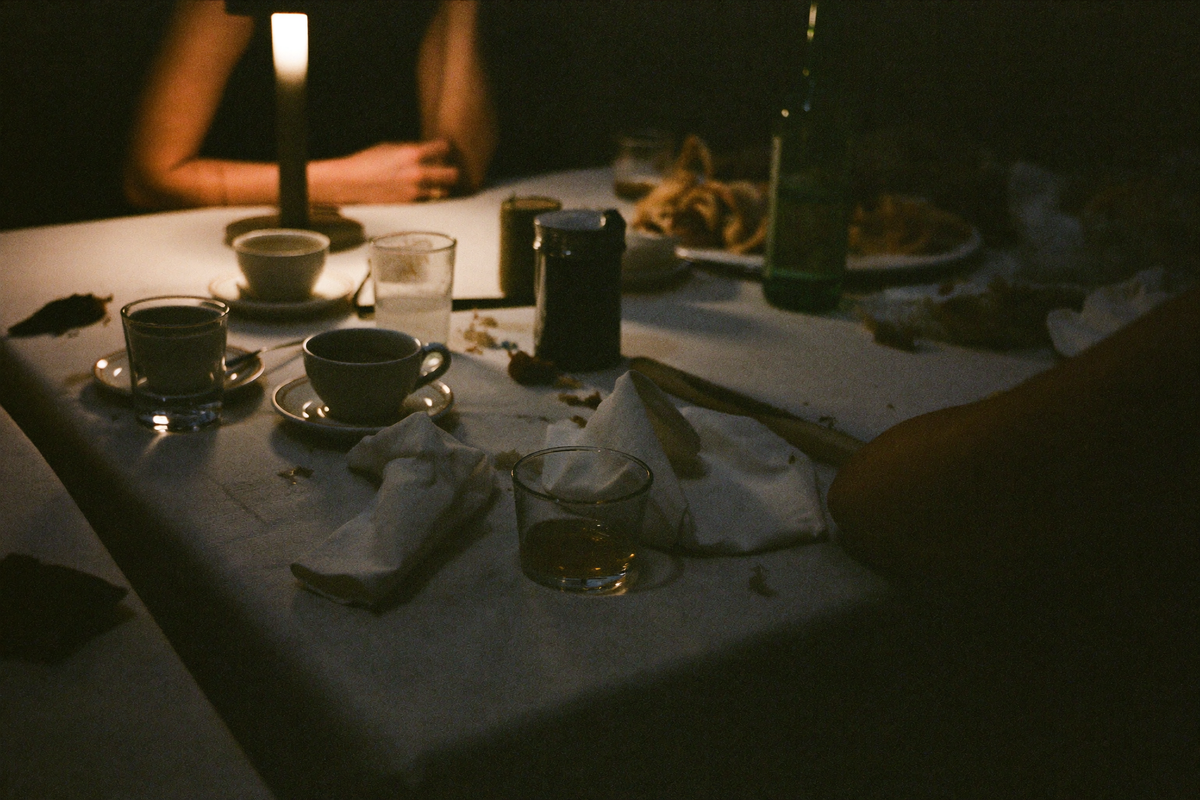
Almost nobody likes their first cup of coffee. It is bitter, it is hot, and the appeal is entirely invisible to the person drinking it. And yet nearly everyone tries again, usually around the age they start doing things adults do, and most of them end up drinking it daily for the rest of their lives.
Coffee reads as adult because it is a bitter drink you have to learn to like, taken at a fixed time, in a shared setting, usually to enable work. Every part of that sentence is a signal, and none of it is about flavour. Understanding this changes what you should spend money on, because most coffee marketing sells the signal and charges you for the flavour.
Bitterness has to be learned
Humans are born disliking bitter. It is a useful default, because bitter compounds in nature are frequently toxic, and children reject them reliably.
Learning to enjoy a bitter thing is therefore always a social process rather than an instinctive one. Coffee, beer, olives, dark chocolate and neat spirits all share this shape. You persist because people you want to resemble are persisting, and eventually the association flips: the taste stops being an obstacle and becomes the point.
That flip is the mechanism. It is why coffee cannot be a childhood drink, and why it works so well as a marker of having crossed into something.
The ritual is doing more than the drink
Coffee arrives attached to a time and a place. It marks the beginning of the working day, or the pause in the middle of it, or the end of a meal. In most cultures it is the drink you offer a guest within a minute of them sitting down.
This is why coffee resists being optimised into pure efficiency. A caffeine pill delivers the active ingredient faster, more cheaply and more precisely, and essentially nobody wants one. The pharmacology was never the product.
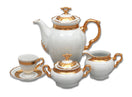
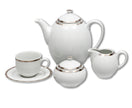
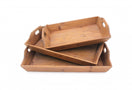
It also explains why the objects matter more than they logically should. A cup that is pleasant to hold, a pot that goes on a table, a tray that turns a drink into an occasion: these are not upgrades to the liquid. They are the parts of the ritual you can actually improve.
What this framing will not do
It will not tell you which coffee to buy, and it should not be used to justify spending more. The fact that coffee is socially loaded is exactly what makes it easy to sell people expensive things they will not enjoy any more than the cheap version. A $400 grinder bought for the signal is a worse purchase than a $120 one bought because you can taste the difference, and both of those figures are as of August 2026.
It also does not mean flavour is irrelevant. There is a real, measurable gap between coffee brewed well and coffee brewed badly, and most people can taste it immediately when the two are side by side. Cultural framing sits on top of that gap. It does not replace it.
And it is not universal in the way sweeping cultural claims like to pretend. Coffee's meaning differs sharply between Italy, Sweden, Ethiopia, Turkey and the United States, and treating one of those as the human default is a mistake we would rather not make on a page like this.
The honest recommendation
Spend on the parts of the ritual you touch and the parts that change the drink, and be sceptical of everything in between.
The things that change the drink are a grinder, a scale, fresh coffee and water at the right temperature. Those are worth real money and they are mostly not things we sell.
The things you touch are the cup, the pot and the surface it lands on. Those are worth real money too, for a different and entirely legitimate reason: you will handle them every morning for years, and a thing you handle daily is worth liking. That is the honest case for a good service, and it is the case we make for ours. It is not a taste argument, and we would rather not pretend it is one.
What is not worth money is anything sold primarily on how serious it makes you look. That includes a lot of coffee equipment, and it includes some of the objects in our own category. If a piece would not earn its place in a house where nobody ever saw it, it is not earning its place.